01
The building is wrong, and nobody can prove why.
We check the equipment, the controls and the data the BAS reports before anyone recommends a replacement.
Start an audit →Controls · Energy · Compliance · New York and New Jersey
Smart HVAC, controls, and building automation for owners and facilities teams across New York and New Jersey.
You usually hire four vendors: someone to lower the rate, someone to lower the peak, someone to handle compliance, someone to monitor whether it is all working. One bill to one firm, and you get all four.
Two minutes, using your address and a recent bill.
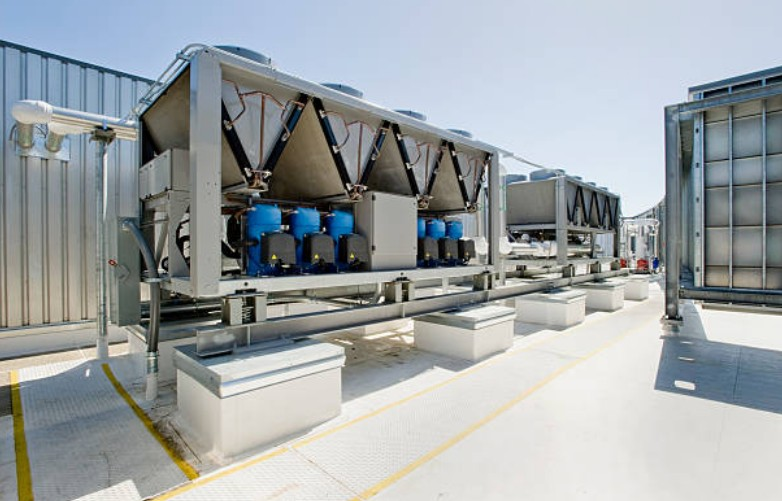 Rooftop chiller plant, field work
Start where you are
You can enter at any stage. The best solutions move from diagnosis through funding, installation, optimization, and proof.
We check the equipment, the controls and the data the BAS reports before anyone recommends a replacement.
Start an audit →Utility programs, NEIF financing and reverse-auction procurement, matched to the project before work begins.
Explore funding →We separate usage, capacity and supply, so you can see what changed and which costs the building can influence.
Decode the bill →Which New York City or New Jersey obligations reach the building, what has to be filed or corrected, and what happens next.
Check obligations →Certified with New York City, New York State and New Jersey, with the paperwork institutional buyers ask for.
Review credentials →The right answer depends on where the building is. New York and New Jersey run on different utilities, capacity markets and laws, so every page here says which state it describes.
How it starts
Three questions before anything else is asked of you.
Your address.
ZIP codes split across utility territories and capacity zones. A street address resolves your utility, your zone, and which filings you already owe.
Building type and size.
Different thresholds, different obligations, in each state.
What is driving this.
Broken equipment, a budget cycle, a deadline, or a bill you cannot explain.
What you get from us
You see what qualifies for funding, what you are already required to do, what the peak costs you now, and what you will track to prove the work worked.
Until the screening tool is live, this is a short intake form. We reply by email with what a review would cover and what it would not.
True with zero eligibility
Even when no program applies and no filing is due, five things keep moving. Each one has a page in the library.
Why ieComfort
Founded in 2016 by William H. Harris III: field technician at Johnson Controls, then VP of Education Sales at Trane, then General Manager of Daikin Applied New York. He spent years on the manufacturer's side of the table, which is why he knows what an equipment quote leaves out.
Partnership with Transparent Energy for reverse-auction visibility on supply costs. Enrolled trade ally with four utilities: Con Edison, PSE&G, JCP&L, Atlantic City Electric. Incentives flow to you, not chased by us.
Field commissioning as well as installation. We verify the sequence, optimize the peak, and integrate across open and proprietary systems. Monitoring and predictive maintenance track whether the work survives the first year and beyond.
MBE certified with NYC, New York State, New Jersey, the Port Authority, and NYNJMSDC. NJDOT DBE. Registered for New Jersey public works. Institutional clients include Columbia, NYC DEP, RiverSpring Living, and the Jersey City Housing Authority. We identify which deadlines apply, file what is required, and prove compliance through analytics.
NYC MBE #MWCERT2018-1427 · NYS MBE #64420 · Port Authority NY/NJ MBE · NJ MBE #74665-21 · NJ SBE #A0096-06 · NJDOT DBE · NYNJMSDC #NY15689
Proof from the field
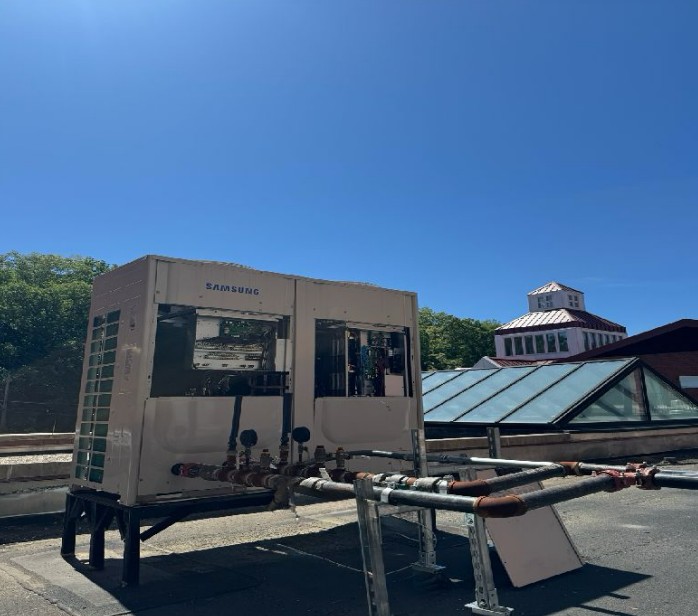
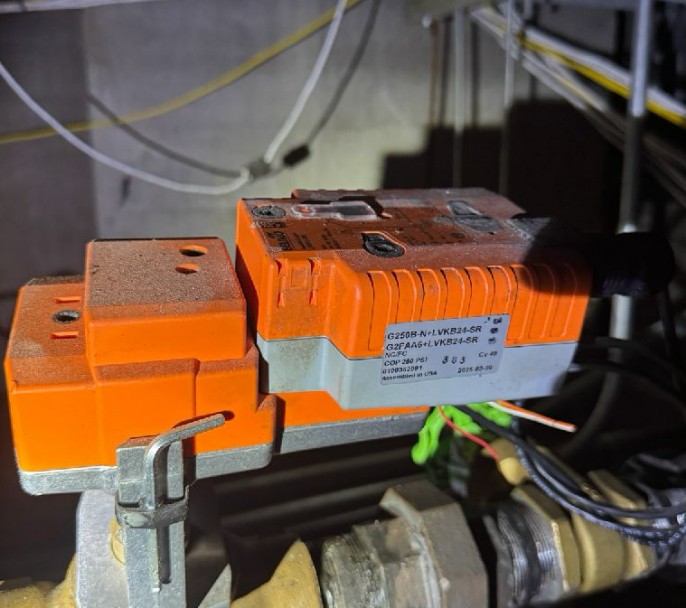
At an occupied senior-care campus in the Bronx, ieComfort connected HVAC equipment, field devices, controls, and monitoring into a project the institution could evaluate, fund, and deliver while the campus remained operational.
The project delivered a Samsung VRF chiller, Belimo three-way control valves, and monitoring and control while the campus continued operating. Nobody moved out, and the installation is still under active monitoring.
Weeks on an occupied campus
Delivered while the senior-care campus stayed open and operational.
Project contract
Equipment, hydronic controls, monitoring and delivery.
Reported annual saving
As reported in the project record. The write-up explains where each figure comes from.
Simple payback
Based on the reported annual saving and the $470,000 contract.
How ieComfort works
What the equipment is doing, which sensor points are reliable, and what the systems cannot see. Real data before any decisions.
Utility rebates stacked with NEIF financing and reverse-auction procurement, matched to the project before work begins.
Install equipment that lowers the peak, configure controls to hold it there, and fold compliance obligations into the design so nothing conflicts.
Monitoring and analytics show whether systems are running as intended, and track the rate, the load and compliance over time.
One bill to one firm, and clarity on all four.
The library
Plain explanations of how buildings in New York and New Jersey are run, paid for and regulated. Every article shows its sources and a last-reviewed date.
Capacity is set differently in New York and New Jersey, and it is the line most buildings never look at.
Read how capacity works →Local laws, state rules and utility filings, sorted by which ones reach your address.
Read in the library →What a building automation system reports, what it cannot see, and what to check before you approve a decision.
Read in the library →Send a bill and an equipment list. We will show you what your building qualifies for, what it already owes, and what happens next.
Prefer to talk first? Say so in the form and we call you.